

The flurry of YouTube channels cataloguing rarities from times gone by have offered a new method of digging in this digital age. One that remains a favourite of ours is Okonkole Y Trompa, named after a song from infamous jazz bassist Jaco Pastorius.
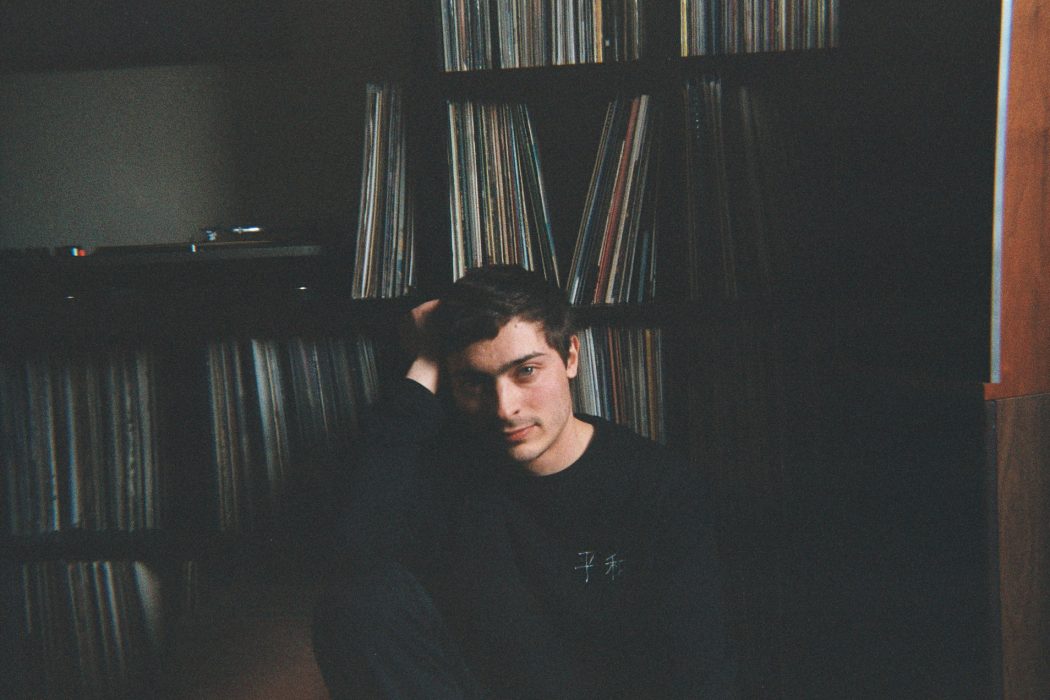
PAM a.k.a Pierre-Arthur Michau is one of the two minds behind the channel, and also makes up part of French collective and label Antinote, headed up by our previous Diggers Directory guest Zaltan. With friend Satoshi, PAM uses Okonkole Y Trompa as a platform for archiving recent finds and shining a light on artists deserved of support, whilst giving some insight into the social, cultural and historical context surrounding the records on the blog that runs alongside it. The pair also host a monthly show on NTS Radio, which acts as another outlet for these musical discoveries, introducing another audience to their unique and wonderful finds.
We speak to PAM about life as a record collector, alongside a mix totalling over two hours, based on a “good nightmare” that he recently experienced. What does that sound like? Expect wrong speed selections, T.S. Eliot inspirations and something mysterious going on in the background.
DJs and producers often mention their musical education came through their family’s record collection. Was this the case for you? Can you pick out any pivotal records from your upbringing that informed your musical journey?
No offence to my parents, but their CD collection (I would find out about my father’s records collection that was stored in the garage much later) was not really satisfactory for a curious teenager seeking new musical experiences. It did contain a few biographically important CDs that were to obsess me over the years, and most importantly Art of Noise’s Daft and In Visible Silence.
Everything about these two CDs – from the mysterious riddle-like artworks to the strange voice samples used as instruments – exerted a determining ascendancy over my mind. I was probably five or six when I first scrolled, on my own, in the family CDs crates, and I can clearly remember the mixed feelings of fascination and fear I felt every time I listened to the bizarre sound of The Art of Noise. Nowadays, When I’m digging for records I’m still very actively looking for Moments In Love’s epigones.
Apart from my parents’ CD collection, two places were equally significant in the early stages of my musical journey. First was my hometown’s public library where I could borrow CDs that I would rip on the family computer. There, I would methodically go through each section, probably starting with the Rock section, before moving onto the Jazz, Electronic and Funk-Soul sections. There were many CDs which stood out, including Kraftwerk’s Trans-Europe Express and Miles Davis’ Bitches Brew – to name the most significant ones.
The second place was the internet and especially obscure music blogs like Mutant Sounds or Holywarbles. My family were “late adopters” of ADSL and I gained access to the internet quite late compared to people my age, but I took voracious advantage of it, frantically downloading and listening to mp3s that these blogs made available for the first time for many users. I remember the day when the FBI shut down Megaupload in 2012, it was a heartbreaking moment. Most of these blogs did not survive it as the contributors, who mostly used Megaupload to host files, couldn’t re-upload every file they previously shared on another website, fearing that it might also get taken down.
I jealously kept all the files I downloaded stored on a hard drive until it crashed down. As I’m recalling this period, a few records rips come back to mind; ‘Asphixiation – What Is This Thing Called “Disco”?’, ‘Alan Hawkshaw – The Road Forward’ and ‘African Head Charge – Songs of Praise’ were all highly significant records to me.
People buy records for a multiple of reasons. What first drew you to collecting records and what motivates you to continue digging after all these years?
I first started buying records for a very simple reason: going to car boot sales with my father, I realized that it was way cheaper than CDs. I had some pocket money each month and for the same amount I could either buy one CD a month or a dozen of records and a pack of cigarettes. I was into jazz at the time and it was really easy to find a Return To Forever or a Stan Getz LP for €1 at any flea market or car boot sale.
So I asked my father to give me his old turntable and amplifier, and that’s how it all started. After that initial moment, I also understood that there were records that were rare or highly sought after, and that with a bit of luck you could find them for cheap in the offline world.
Later, what struck me was the fact that some pieces of music were only available on vinyl, unreachable by any other means, especially since the death of all the obscure music blogs I mentioned earlier. That’s probably what keeps me digging for records today, the unassuageable search for forgotten or yet-to-be discovered pieces of music and history.
Where do you store your records and how do you file them?
It’s a very complex process and my records I maniacally filed. Going into details would be long and not very interesting, but it has something to do with countries, genre and personal connections. For example, Can Records, Holger Czukay’s solo albums or Phantom Band records are sitting next to each other on my shelves, and not really far from Manuel Göttsching-related LP’s. Of course, there are many exceptions to the rule that would probably seem bizarre for anyone not familiar with the way I think; but the good thing is that I can find any record I’m thinking about within a few seconds.
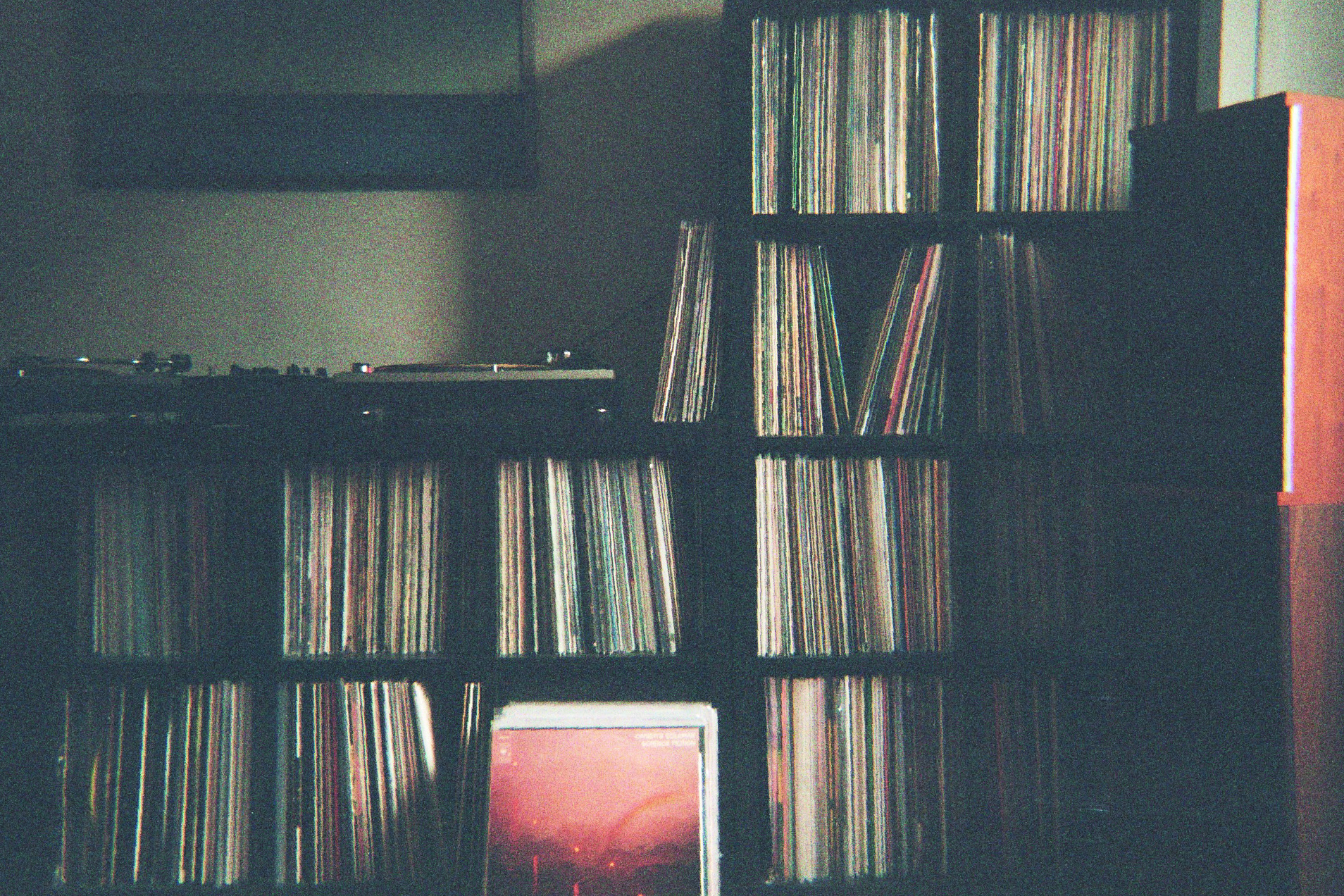
All the records are stored in my living room as I try to keep the collection reasonably sized and, more importantly, potentially connected to the speakers. I would not like to have records stored in another room, as I need them to be instantly available for listening purposes, at a few meters from the turntables.
What are your favourite spots to go digging and why?
My favourite spots are definitely the ones still unknown to me. Especially those somewhere in the French countryside where one can score very local productions, that one would probably not be able to find anywhere else. A recent example that comes to mind is the time when my friend Dave, who runs L’International Records, and I found a copy of a privately released record by Doris Laïze. The copy was sitting in the backroom of a thrift shop in a very small town, a dozen kilometres away from the place where it was recorded. The probability that we’d find this record anywhere else was extremely weak and I tend to think that if we didn’t stop in this place we might have never seen this record ever.
Of course, there are a few Parisian shops I cherish and where I’m almost always finding interesting records if I spend enough time going through the crates. Paris is a wonderful city to dig in as it’s been a passing point for many communities from all over the world. I’m often amazed by the variety of records I’m passing by in shops in Paris and car boot sales in the suburbs. I found pretty rare and obscure records from Japan, Sweden and Brazil, and the route taken by these records – from Rio to the crates of a Parisian shop – is always a mystery.
Digging isn’t just about the records you find, but the people who help you find them. Who are some of the colourful characters you’ve met on your travels in record stores round the world? Any unsung heroes you’d like to shout out?
Of course, there are legendary Parisian shop owners who certainly are colourful, not sure I would call them heroes though. However, I would like to mention Boule O, who runs a shop in Clignancourt flea market with an amazing selection.
I don’t think he is an unsung hero, but I spent a couple of days digging non-stop with Chee Shimizu last year in Berlin and it was a flawless digging session. He is a remarkable digger and a true gentleman, but I’m sure you already know it.
Is there a record (or records), that has continued to be illusive over the years?
There have been many records that haunted me and that I wished to possess for years. Some of them I’ve been lucky enough to find, but the vast majority still seem unreachable.
However, as time goes by, it seems like I care less and less about these illusive records. If I can find them, that’s great, if not, there are plenty more records – perhaps still unknown to anyone – that I’m sure I might fall in love with. Letting go of that obsession is something quite new to me. It’s probably due to the fact that I realised that I found some of my favourite records by chance, without knowing them before finding them.

Do you prefer record shopping as a solitary process or with friends to nerd out with and search for strange sounds together? If the latter, who do you like to go digging with?
I have nothing against a solo digging session but the most vivid memories of digging sessions are always in the company of friends. Recently, I spent three days in Belgium nerding around with living music encyclopedias Vidal Benjamin and Alex Mimikaki and that was a lot of fun. It’s also great to share knowledge about records when digging with friends from different backgrounds, handing records to each other and being shown things that I might not know, especially when we know each other’s tastes.
It’s always a pleasure to go digging in the countryside with my friends Dave and Edouard. Even when we come home with a meagre loot, we always have a good time driving around the country and visiting towns we never heard about before.
For a more relaxed digging experience walking around the Clignancourt flea market with the likes of Nico Motte, Raphaël Top-Secret or Zaltan is always nice.
Walking into a record shop can be quite a daunting experience. Do you have a digging process that helps you hone in on what you’re after?
When I get inside a record shop I don’t know, I quickly scan the shop to feel the musical vibe – whether it has an indie, rock, black music, etc. vibe – and I look for the crates that don’t fit this vibe, disco 12” in a rock shop, for example. But that’s usually just the starting point. When I have time, I try to check every crate, probably starting with the cheap bins. Not long ago I found a sought-after French prog-rock record for super cheap in a shop in which everything indicated that you were in the den of a rock maniac, and every record was overpriced except that particular LP. That’s a process that suits my obsessive mind quite well I believe.
How big a role does album artwork play in your digging?
It’s absolutely essential. It’s your first encounter with a record and it’s probably what will make you decide whether you’ll give it a listen or not – and probably even decide whether you’ll flip the cover to check the credits. Of course it doesn’t mean that a badly printed cover with people dressed as samurais playing synths and Indian percussions in a crystal globe systematically indicates an ace record – it can also be a record filled with Abba covers sung with an atrocious mock Japanese accent. But it certainly is more tempting to check such a record rather than one with an old guy wearing a tuxedo, holding a trumpet in his left hand, and smiling like one of Madame Tussauds’ figures. That being said, I’m always really impressed when people find great tunes on records with this kind of Madame Tussauds guy on it. That’s a “next level” kind of digging to me.
Could you tell us a bit about the mix you’ve done for us?
It’s a long story and so is the mix – over two hours long and it was supposed to be even longer…Have you ever had a “good” nightmare? Because I did a few months ago, and that’s more or less one of the ideas behind this mix. A feverish, frightening, maybe violent dream that somehow ended well? Something you’re tempted to call a “nightmare” but by the time you wake up you’re quite glad you lived it, thinking what your dream self has been through and how it finally ended.
Many records were played at completely incorrect speed, sometimes playing a record at +8 before one at -8; and it may add something special to the whole selection.
There are a few moments of awakening – plot twist: you’ll never really wake up – but I would probably not recommend listening to it before going to bed. Also, I’ve been re-reading George Bataille and T.S. Eliot’s The Waste Land, not something to read before going to bed neither, and maybe I’m just over interpreting the mix, but I feel it is indebted to these readings. Anyway, it’s just a mix, don’t take it too seriously. If you do, pay special attention to what’s going on in the background.
Any standouts in the mix you’d like to mention?
Speaking about awakenings, I realised that I’ve been waking up to the sound of Morning Prayer by Pharoah Sanders – which is featured in the mix – for years when I was in high-school. It’s definitely one the standouts in the mix.
Also, the opening song comes from a very curious record, recorded in Blois (big up Zaltan) and released on Le Kiosque d’Orphée. On Harmonies en Val de Loire, Charles Conord plays his “cor des Alpes”, a gigantic horn, in a church. I mainly bought this record because of its sleeve, and also because I was eager to know what this strange instrument sounded like. It turned out to be pretty impressive.
Casting the net wider now, who are some of the record collectors you most admire and why?
Many people I admire as record collectors have been listed in previous interviews or even featured in this series. I would like to give special S/O to the Parisian people I mentioned previously: Vidal, Dave, Zaltan, Raphaël and Nico Motte for their generosity and their never failing ears. The list could be really long, there are way too many people I respect sharing the same passion for music not to forget anyone. Shout out to them!
And are there any young collectors emerging who we should keep a close eye on?
There are great young DJs you should keep a close eye on. The master of dubious yet addictive sounds DJ Vegetable, Guy Bingley and the Customs crew, NTS radio #1 broadcaster Jack Rollo, my Berliner pal Curtis Barber, Instagram legend Belec, the Bruits de la Passion crew Cloarec (I only saw him play once but it was FRRRESH), and, obviously, Satoshi.
Alongside friend Satoshi you run Okonkole Y Trompa, a blog and Youtube channel that catalogues your recents finds. Can you tell us a bit about how you guys met and started the channel? How has it evolved since?
We met a while ago, about a week after Satoshi moved to Paris at L’International Records. We were both indebted to blogs where we discovered a lot of music and I was already feeling nostalgic about the golden era of Mutant Sounds and co, so the idea to do a blog where we would share stories about music we love that was not available on the internet came quite naturally.
Since then, the articles became lengthier and more documented – that’s why I’m also reviewing fewer records than I used to. Otherwise we’re still following the same tacit rules, trying to keep the musical spectrum as broad as possible.
The blog also sheds some light on the historical and cultural context that surrounds the records. Do you feel that learning about the context and origins gives you a much richer experience?
I don’t want to live in a world where everything is just here, decontextualised, for the pleasure of the “user”… some sort of giant Instagram. Music is much more than just “tropical boogie bangers with nice digital synths”. People actually recorded it, in a specific social, political, historical, cultural context. Gospel music is religious music, and it means a lot.
In order to answer simply and without going into further details, it’s not only giving a richer experience, it’s absolutely essential to understand the music and why people recorded it.
You and Satoshi also host a show on NTS which peddles a similar idea. How is that going?
I like to think of the show as a way to pursue what we’re doing on the blog, and especially being able to show how what you might read about on Okonkole Y Trompa accurately resonates with contemporary productions. We had a few guests recently and it also feels nice to be able to share the tastes and the skills of people we love.
And finally is there anything else coming up on the horizon that’s getting you excited?
There’s actually a label coming up and it’s probably not what you might be expecting from me! More info really really soon!


